Buc-ee’s filed a federal trademark infringement lawsuit on February 18, 2026, against an Ohio gas station chain whose cartoon moose mascot looks uncomfortably similar to its iconic beaver. The target: Coles IP Holdings LLC, doing business as Mickey’s, a family-owned chain of roughly 42 convenience stores and gas stations spread across northern Ohio.
Filed in the U.S. District Court for the Northern District of Ohio, Western Division (Case No. 3:26cv00414), the complaint alleges trademark infringement under the Lanham Act, unfair competition, and deceptive trade practices. Buc-ee’s is not requesting a settlement. It wants a permanent injunction, destruction of infringing materials, treble damages, and attorney fees. A jury trial has been requested.
The timing sharpens everything. Buc-ee’s, the Texas-based travel center chain with more than 54 locations, opens its first Ohio location in Huber Heights, near Dayton, on April 6, 2026. That is a 74,000-square-foot travel center with 120 fuel pumps and 700 parking spaces. The federal lawsuit landed seven weeks before that ribbon-cutting. Buc-ee’s is not waiting to see how the market shakes out. It is drawing the line before it walks through the door.
Why a Beaver and a Moose End Up in Federal Court
Trademark infringement claims turn on likelihood of confusion. When I review cases like this, I look at the same factors courts apply: mark similarity, the similarity of goods and services, the strength of the plaintiff’s mark, and evidence of actual confusion. Here, the services overlap completely. Both Buc-ee’s and Mickey’s sell fuel and convenience store goods. That overlap does not help Mickey’s.
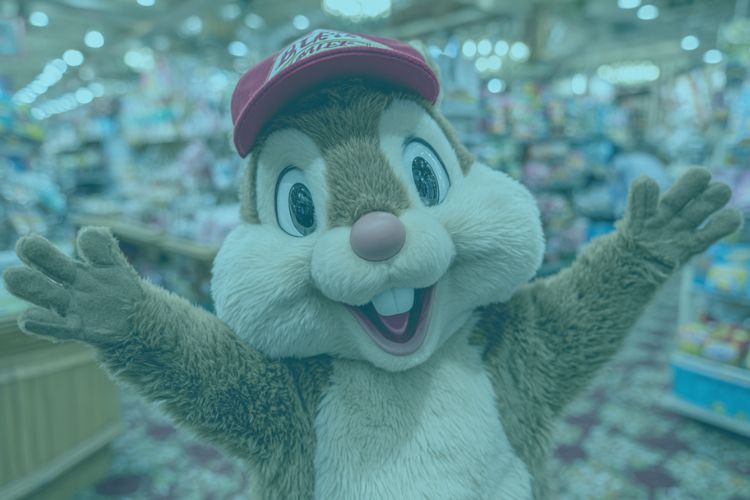
The complaint points to specific visual parallels between the two logos. Buc-ee’s mascot is a buck-toothed cartoon beaver facing right, wide-eyed, smiling, set against a yellow circle. Mickey’s “Mickey the Moose” mascot, introduced in 2020 and redesigned with a USPTO filing in June 2025, features a moose head facing right, with wide eyes, a smile, set inside a red hexagon. Both use heavy red branding. The complaint also flags the name change. Mickey’s spent more than 30 years as “Mickey Mart.” Rebranding to “Mickey’s” in 2025 moved closer to Buc-ee’s possessive format, and closer to Buc-ee’s identity overall.
Buc-ee’s has not been shy about protecting its marks. It won a jury verdict against Choke Canyon, a Texas travel center chain that used an alligator logo. It successfully opposed Nut Huggers Apparel in a TTAB proceeding in November 2025, blocking an Oklahoma shop’s squirrel-based branding. You can read more about Buc-ee’s recent trademark dispute with Oklahoma’s Nut Huggers Apparel to see how that opposition played out. The pattern is deliberate and consistent.
What makes this filing notable is the escalation from administrative to federal proceedings. Buc-ee’s filed a TTAB cancellation petition against Mickey’s USPTO application back in August 2025. That proceeding is still pending. Filing a federal district court lawsuit in February 2026 runs on a separate track, with broader remedies available, including the treble damages and injunctive relief that a federal court can grant and a TTAB panel cannot. Buc-ee’s is not waiting for the administrative process to resolve.
How a Rebrand Turned Into a Federal Lawsuit
Mickey’s did not become a trademark defendant overnight. The Coles Group has operated in northern Ohio for over 30 years under the “Mickey Mart” name. That history gave it a regional identity. The decision to rebrand to “Mickey’s” in 2025 and redesign the moose mascot for a new USPTO filing is what changed the calculus. A company that sat comfortably as “Mickey Mart” for three decades moved its brand identity closer to Buc-ee’s at precisely the moment Buc-ee’s was expanding into Ohio.
Mascot trademarks carry real weight when they are properly registered and actively used. Buc-ee’s beaver has been federally registered since May 28, 2007. That is nearly 20 years of registration, backed by a chain of more than 54 locations across 10 or more states, merchandise lines, and a loyal following that treats the brand as a destination rather than a gas stop. The question of whether you can actually trademark a mascot has a clear answer when the mascot has that kind of history and market penetration. Buc-ee’s beaver is not just decorative. It is the brand.
Geography makes this worse for Mickey’s. Buc-ee’s announced expansion into eight new states during 2026 and 2027, including Ohio. An Ohio-based convenience store chain rebranding in 2025 to look and feel more like Buc-ee’s, in the year Buc-ee’s publicly announced Ohio entry, creates an obvious inference the complaint likely exploits. The timing does not look coincidental from the outside, even if it was.
The market stakes are concrete. Both companies sell fuel, snacks, and branded merchandise to the same road-trip and commuter customer base. Mickey’s is co-branded with Taco Bell, Subway, and Dunkin, which signals it operates at serious scale across its 42 locations. That scale cuts both ways. It means Mickey’s has the market presence to cause real consumer confusion. It also means that if Buc-ee’s wins, the cost of compliance falls across dozens of sites.
What This Case Teaches About Pre-Expansion Trademark Strategy
Buc-ee’s behavior here is a clinic in proactive enforcement. The company did not wait to see whether Ohio customers would confuse Mickey’s moose with its beaver. It filed the TTAB cancellation petition in August 2025 and followed with federal court action in February 2026, all before a single Buc-ee’s employee clocked in at the Huber Heights location. Filing before your market entry protects you from walking into a geography where a confusingly similar mark has already gained traction.
The lesson for any business rebranding or building a new mascot is direct: run a professional trademark search before committing to your branding. A clearance search for a national convenience store chain entering a new territory would have flagged Buc-ee’s federally registered beaver mascot, its red color scheme, its possessive brand name format, and its documented enforcement history. That search costs $1,195 plus government filing fees of $250 to $350 per class. Compared to federal litigation, that number is not even a rounding error. Mickey’s is now looking at potential treble damages, attorney fees, and the cost of replacing signage, uniforms, and merchandise across 42 locations. That is a seven-figure exposure, and it was avoidable.
The timing of your protection also matters. If you operate a regional brand and a national competitor announces expansion into your geography, that is the moment to audit your trademark portfolio. Check your registrations, review your enforcement options, and verify your marks are current and defensible. Do not wait until the larger player opens a location down the road and then try to understand your position. The window to act proactively is before the competitor arrives, not after.
In my experience, delayed clearance is not just a legal risk. It is a business risk. Rebranding across 42 locations after a federal court order is not a matter of updating a website. It means new signage, new uniforms, new vehicle wraps, new packaging, and new co-branded materials coordinated with Taco Bell, Subway, and Dunkin. The disruption compounds the legal cost. Mickey’s is facing that scenario now because no one ran the search in 2020 when the moose was introduced, or in 2025 when the rebrand accelerated it.
Taking Action Before Someone Takes Action Against You
Trademark conflicts do not wait for convenient timing. Buc-ee’s filed this lawsuit less than two months before its Ohio opening, which means Mickey’s is fighting a federal case while Buc-ee’s is still setting up its grand opening. If you are expanding, rebranding, or building a mascot-based identity, the time to clear and protect your marks is before you commit to a direction, not after you have printed 10,000 bags and hung signage across dozens of locations.
My work covers the full range of what a growing brand needs: clearance searches before launch, strategic registration to build a defensible portfolio, periodic portfolio reviews when your business enters new markets, and enforcement strategies when someone else is crowding your space. The goal is never to walk into a new market unprepared or to discover a conflict after you have already spent money building around it.
If your brand is expanding into new territory, or you are in the middle of a rebrand and want to know where you stand, contact me for a consultation. Getting clear on your trademark position now costs far less than getting served with a federal complaint later.