The NCAA filed a federal trademark lawsuit against DraftKings on March 20, 2026, accusing the sportsbook of plastering “March Madness,” “Final Four,” and other registered marks across its betting platform without permission. On March 26, 2026, a federal judge denied the NCAA’s emergency request to stop it.
DraftKings embedded the marks throughout its platform. Navigation tabs used “March Madness” and “Final Four” to route users to NCAA tournament betting. Section headers carried the marks above wagering options. Promotional banners and parlay labels used them in marketing. The marks appeared in metatags to capture search traffic. “Final Four” had been live since September 2025. “March Madness” had been in use since at least 2023.
At stake are four federally registered marks: MARCH MADNESS, FINAL FOUR, ELITE EIGHT, and NCAA SWEET SIXTEEN. Those marks identify a tournament that will generate an estimated $3 billion in wagering volume in 2026 alone. DraftKings isn’t just describing an event. It’s using the NCAA’s brand equity to attract bettors and optimize search placement without any licensing agreement in place.
The twist in the ruling is what makes Case No. 1:26-CV-557 worth examining. Judge Tanya Walton Pratt, presiding in the U.S. District Court for the Southern District of Indiana, found that the NCAA will likely win on the merits when the case goes to a full hearing. She denied the TRO anyway. The reason has nothing to do with whether DraftKings infringed. It comes down to timing: the NCAA waited too long to ask for emergency relief.
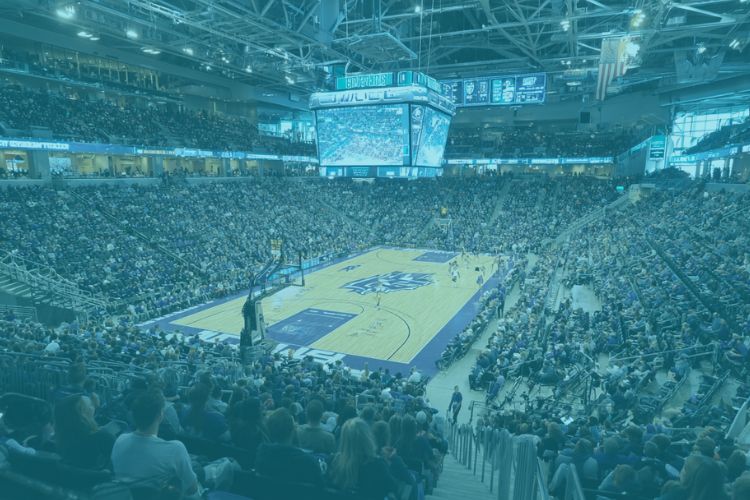
Why the NCAA Lost the Battle but May Win the War
The NCAA filed three claims under the Lanham Act. Count one: trademark infringement under 15 USC 1114 for using the registered marks without authorization. Count two: false association and unfair competition under 15 USC 1125(a), arguing DraftKings’ use implies a sponsorship relationship that doesn’t exist. Count three: dilution by tarnishment under 15 USC 1125(c). For anyone interested in understanding how trademark infringement and dilution claims work, this case demonstrates all three routes in a single filing. The tarnishment claim carries particular weight here. The NCAA has spent years maintaining strict distance from gambling operators, and DraftKings’ use of the marks on a betting platform cuts directly against that positioning.
Obtaining a TRO required the NCAA to satisfy a four-part test: likelihood of success on the merits, balance of equities, public interest, and irreparable harm. Judge Pratt found the NCAA met the first three. The fourth element is where the case fell apart for emergency purposes. The NCAA knew DraftKings had been displaying “Final Four” since September 2025. The lawsuit landed six months later, on March 20, 2026. Courts read that kind of delay as a signal that the harm is tolerable. If the situation were truly an emergency, the plaintiff would have moved sooner.
DraftKings offered nominative fair use as its primary defense: the argument that it needed to use those exact marks to accurately identify the NCAA tournament for betting purposes. Judge Pratt rejected it. The Seventh Circuit has not adopted the nominative fair use doctrine, and the judge sided with the NCAA’s position that adequate alternatives exist. DraftKings could use “Tournament” or “Men’s Division I Semifinals” without appropriating federally registered marks. DraftKings also raised First Amendment claims, arguing the use constituted protected speech, but the availability of non-infringing alternatives weakened that position as well.
Discovery is the next phase. Judge Pratt’s ruling was explicit: the NCAA may still obtain a preliminary or permanent injunction as the record develops. The relief sought covers injunctive relief, disgorgement of profits, treble damages, and attorney fees. The NCAA also designated this an exceptional case under 15 USC 1117(a), which is the statutory basis for recovering fees in trademark litigation. Losing the TRO round doesn’t change the underlying strength of the claims. It delays enforcement and gives DraftKings time to argue the merits.
The $17.2 Million Name and the Licensing Gambit
“March Madness” didn’t start with college basketball. H.V. Porter, an assistant secretary at the Illinois High School Association, coined the phrase in 1939 to describe the state’s high school basketball tournament. The NCAA adopted the term for its own tournament decades later, which created a legal conflict with the IHSA over who owned the name. That dispute dragged through the courts until 2000, when the two organizations formed a joint venture called the March Madness Athletic Association LLC to hold the mark together.
Even with that shared ownership structure, the phrase kept growing in commercial value. Brent Musburger popularized it nationally during his CBS broadcasts starting in 1982. The first federal trademark registration followed in 1989. By 2010, the NCAA decided shared ownership created too much uncertainty and paid the IHSA $17.2 million to acquire full rights. That price reflects what the March Madness brand was worth before the legal sports betting market existed. The value has only grown since.
In April 2025, the NCAA took a significant step: it struck a deal with Genius Sports to create an Authorized Gaming Licensee program running through 2032. For the first time, the NCAA built a formal pathway for sportsbooks to use its marks. The structure matters. Authorized sportsbooks can display NCAA marks inside their apps, but the license comes with conditions: data sharing, removal of proposition bets that create integrity risks, and cooperation with investigations into suspicious wagering activity. Understanding how formal trademark license agreements structure these relationships helps explain why the NCAA chose this model. The NCAA gets enforcement cooperation. The sportsbooks get legitimacy. Everyone who doesn’t sign up gets a lawsuit.
DraftKings is not a signatory to the AGL program. That fact makes the litigation more than a trademark enforcement action. It’s an industry-wide signal. The NCAA spent years negotiating a licensing structure, opened it to operators, and then filed suit against one of the largest sportsbooks in the country for using its marks without joining. The message isn’t subtle: license or litigate.
Timing, Monitoring, and the Cost of Waiting
The NCAA’s problem in this case wasn’t the strength of its marks. All four carry federal registrations. The infringement was visible and documented. The problem was a six-month gap between discovery and action. In trademark enforcement, that gap has consequences. Courts treat prolonged inaction as evidence that the harm isn’t actually urgent, and in some cases as evidence of acquiescence. The NCAA didn’t lose the TRO because DraftKings’ use was ambiguous. It lost because the NCAA’s own timeline undercut the argument that immediate relief was necessary.
For any business holding registered marks, the lesson is direct. Start by building a trademark monitoring program before problems surface so infringement doesn’t accumulate undetected for months before anyone reacts. The NCAA has a legal department and the resources to monitor its marks across every major digital platform. It still let six months pass. Smaller businesses, without dedicated IP staff, face a steeper climb when infringement goes unnoticed or unchallenged.
Consider the cost comparison. The NCAA is now in federal litigation seeking disgorgement of profits and treble damages, a process that will take years and cost millions in attorney fees before any resolution. A cease-and-desist letter sent in September 2025, the moment the NCAA identified DraftKings’ use of “Final Four,” would have cost a fraction of that. It also would have preserved the option for emergency injunctive relief. Acting in September 2025 meant the NCAA had choices. Waiting until March 2026 removed one of them.
Registration without enforcement is a gap. All four of the NCAA’s marks carry federal registrations going back to 1989 in some cases. Registration establishes ownership and creates a presumption of validity. It doesn’t stop unauthorized use on its own. The marks still appeared in DraftKings’ navigation tabs, parlay labels, and metatags throughout the 2025 tournament season and into the 2026 cycle. Active monitoring of digital platforms, particularly in a sector like sports betting where competitive operators track each other’s positioning, is what converts registration into actual protection.
Protect Your Brand Before Someone Else Profits From It
Whether you’re building a brand worth $17.2 million or $17,000, the principle is the same: your trademark only protects you if you enforce it. The NCAA’s experience shows that even the strongest marks with the clearest infringement can lose emergency protection when enforcement comes too late.
I help businesses build trademark protection from the ground up, starting with a clearance search to identify conflicts before you invest in a brand, filing the USPTO application, and setting up monitoring so you know when someone starts using your mark without permission. My full-service registration package costs $1,195 plus government filing fees ($250-$350 per class), and that investment is measured against the alternative: discovering infringement after it’s already cost you customers and market position.
If you have questions about protecting your brand or responding to potential infringement, contact me for a consultation. The earlier you act, the more options you have.