Sixty-eight days after Perdue announced its limited-edition 6 7 Chicken Nuggets, the company filed a federal trademark and trade-dress lawsuit over a rival product. The parties agreed to settle less than a month later, leaving the package designs, three pending USPTO applications, and the speed of the conflict as the clearest practical record.
The Freezer-Aisle Fight Ended Before A Merits Ruling
Perdue Foods LLC v. John Soules Foods, Inc. moved from complaint to reported settlement in 23 days. Perdue filed case 3:26-cv-00584 in the U.S. District Court for the Eastern District of Virginia on June 23, 2026. Its complaint asserted false designation, unfair competition, trademark infringement, and trade-dress infringement. Perdue also filed a preliminary-injunction motion, supporting memorandum, and declaration that day, seeking to stop the challenged product during its planned July rollout.
John Soules Foods marketed the competing product as Soules Kitchen.
The complaint covered the name and the package appearance. Perdue alleged that John Soules Foods adopted similar breaded 6 and 7 nugget shapes, cartoon hands, and a playful freezer-bag presentation. The complaint also identified hand-drawn stars, smiley faces, squiggles, and youth-oriented graphics as parts of the claimed package appearance. Perdue requested preliminary and permanent injunctions, recall or destruction of challenged materials, profits, damages, fees, costs, and a jury trial. Those requests remained allegations and requested remedies throughout the short case.
Judge Roderick C. Young set the current procedural course on July 16. The reported settlement and July 16 order directed the parties to file a stipulation of dismissal by August 6 and denied the preliminary-injunction motion as moot in light of their agreement.
On July 20, the settlement had been reached and the dismissal papers remained pending. The terms were unreported. The court issued no decision on infringement, protectable trade dress, consumer confusion, damages, or ownership of the cultural phrase. The agreement halted the preliminary-injunction fight before either package received a merits ruling.
What Perdue Claimed The Packaging Communicated
Perdue entered the case with three use-based trademark applications filed on April 30, 2026. Serial 99796669 covers the standard characters 6 7. Serial 99796671 depicts a stylized 6 above one hand and a stylized 7 above the other. Serial 99797059 adds the colored breaded numerals, accent lines, and yellow hands. Each application covers meat and poultry goods that include frozen breaded chicken nuggets in Class 29, and each claims April 27 as its first-use date. Together, they claimed separate layers of the campaign presentation.
The three records remained live and pending when checked on July 20. No examiner had been assigned, and the USPTO record showed no approval. A pending application documents the applicant’s claim and filing position. Federal registration presumptions arise only after registration.
Perdue therefore based its lawsuit on rights it claimed from use in the market. Section 43(a) of the Lanham Act, 15 U.S.C. § 1125, allows claims involving unregistered source identifiers and trade dress. Trade dress can cover the overall source-identifying appearance of packaging when the claimed combination is distinctive and nonfunctional. Perdue’s theory joined the wording and two designs in its applications with a broader claim based on the bag’s combined visual presentation.
Confusion analysis turns on the marketplace context, as I explain in my guide to how courts evaluate likely consumer confusion. Here, the companies offered competing frozen chicken nuggets through national grocery channels. Perdue alleged overlap in numeral shapes, hands, package graphics, and intended buyers. Its complaint also cited one social-media commenter who allegedly mistook the Soules product for Perdue’s Walmart item. That comment was a pleaded example, and the court never weighed it.
The companies targeted national grocery freezer aisles with directly competing goods. Perdue relied on that combined market setting and each disputed graphic in its confusion theory.
The public docket for the Perdue case confirms the June 23 filing, Lanham Act cause, jury demand, and preliminary-injunction filings. Settlement stopped the case before a judge tested distinctiveness, nonfunctionality, likely confusion, or the scope of any enforceable rights. The pending applications and complaint preserve Perdue’s positions. The answers would have required a merits decision.
A Meme Created A Short Retail Window
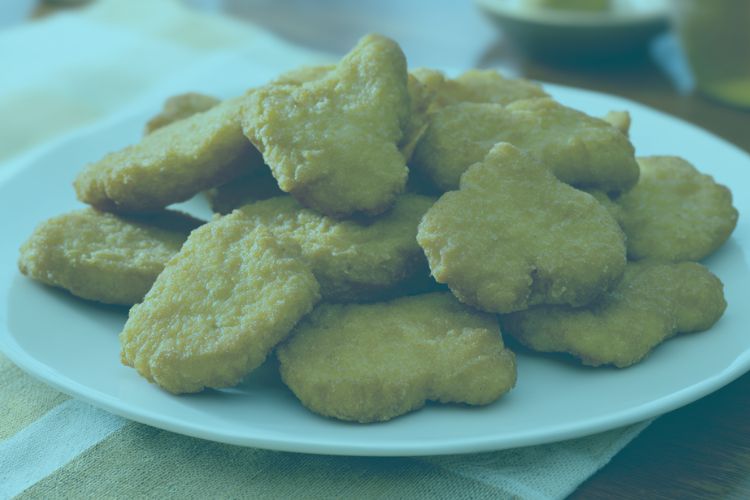
The product calendars explain why five weeks of litigation could consume much of the opportunity. Perdue announced its limited-edition Six Seven Chicken Nuggets on April 16. The panko-breaded pieces were shaped like 6 and 7, priced at a suggested $7.24, and scheduled to reach 3,000 Walmart stores by May 1. Perdue described the run as a Walmart exclusive available while supplies lasted.
Soules Kitchen announced its 67 Chicken Nugget on June 7. Its 24-ounce bag carried a suggested price of $6.70 and a planned July rollout through Kroger and ALDI. The campaign included Maverick Trevillian, identified in the announcement as the 67 Kid. Both packages tied ordinary frozen chicken nuggets to a cultural reference whose commercial value depended on recognition at that moment.
The launches also split their announced distribution paths. Perdue named Walmart as its exclusive channel, while Soules identified Kroger and ALDI. The overlap placed competing national grocery plans in the same freezer category that season. Perdue’s retailer allegation turned that commercial pressure into a specific claimed harm.
The conflict arrived before the second launch reached its announced retail date. Reporting on the complaint says Perdue sent a cease-and-desist letter on June 9. John Soules Foods declined to discontinue the challenged presentation on June 17, and Perdue sued six days later. The complaint also alleged that a national grocery retailer declined to carry Perdue’s product because it planned to stock the Soules version. That claimed lost placement remained unproven when the parties settled.
Frozen-aisle shelf space, retailer plans, packaging runs, campaign partners, and paid promotion all require decisions before shoppers see the product. A meme shortens the period available to recover those commitments. Litigation over an emergency injunction can consume the same weeks the campaign was designed to use.
A rapid settlement is commercially understandable within that window, although the parties disclosed neither their motivation nor their terms. Packaging and campaign signals can also overlap across several features, as shown by a recent fight over product colors and campaign cues. For a trend product, the legal dispute and the retail opportunity can run on the same shrinking calendar.
Clear Trend-Based Campaigns Before Launch
Start at the concept stage with an inventory of every asset the public will encounter. Include the words, stylized numbers, hand graphics, product shapes, colors, package layout, slogans, campaign partners, price hooks, retailer copy, and social captions. The 6 7 dispute shows how one launch can place several possible source identifiers inside a single freezer bag.
Search the proposed wording and visual marks across federal records and the market before announcing the product or committing to a retailer. Common-law uses, related product categories, adjacent merchandise, and actual marketplace presentations can reveal conflicts that a search for one exact phrase would miss. A professional search across federal and market sources should follow the way buyers will encounter the whole campaign.
Search the shorthand retailers, campaign partners, and shoppers may use. Check the formal name, stylized number, and package image separately, then compare their combined appearance in advertising and on the shelf.
Next, separate the elements that may support individual applications from the overall appearance the company expects buyers to recognize. Record why a package feature identifies source and whether it performs a practical function. That analysis helps define what the business may seek to register, what it may assert as trade dress, and which design choices competitors may need to use for ordinary functional reasons.
Place clearance gates before each commitment that narrows the available choices. Manufacturing, retailer presentations, photography, campaign-partner agreements, and paid promotion make a later name or design change more disruptive. An early conflict may allow a clean redesign. The same conflict after packaging and retail commitments can leave the business comparing a license, coexistence agreement, negotiated sell-off period, or litigation.
Record the version, searches, conflicts, and reason for each decision. The file should match the package and campaign the business releases.
Keep the record as the launch moves forward. Dated packaging, first-use materials, sales and shipping records, retailer communications, advertising, and reports of actual confusion can become important in an enforcement dispute. If a demand letter arrives, preserve those materials before changing the campaign. Then compare each response with the inventory already produced, the strength of the search results, and the sales window that remains.
Protect The Launch While Options Remain
Perdue announced its product on April 16, filed suit on June 23, and reached a settlement reported by July 17. The reported demand letter followed Soules’ announcement by two days, after both campaigns were public. That sequence fit inside one limited-edition retail season. By the time a complaint was filed, both brands had already publicly announced products, retailers, prices, packaging, and campaign plans. Each public commitment reduced the range of quiet, inexpensive changes available to either side.
I review proposed names, designs, package presentation, search results, filing options, launch materials, and demand-letter risk. I also help a business separate individual mark filings from an asserted package look and place review gates before manufacturing, retailer pitches, and promotion. Review at that stage lets the brand adjust those elements while the campaign window remains open.
If a launch depends on a trend, limited retail season, campaign partner, or unusual package design, contact my office to review the launch before the announcement fixes the public version. Early review preserves more choices if another business has already claimed similar words, designs, or market signals.