A seven-ounce coffee can and a sixteen-ounce energy drink have carried a five-year naming dispute to the Supreme Court. The justices will decide who gets to determine how strong the RISE mark is before the rest of the confusion analysis begins.
How a Beverage Naming Fight Reached the Supreme Court
On June 29, 2026, the Supreme Court granted review in RiseandShine Corporation dba Rise Brewing v. PepsiCo, Inc., No. 24-1016. The Supreme Court’s public docket records a narrow question reached after an injunction, an appellate reversal, summary judgment, and affirmance.
Rise Brewing began using RISE-formative marks in May 2015 and launched canned nitro cold brew products in 2016. Its examples used a seven-ounce slim can with RISE as the dominant word. PepsiCo launched MTN DEW RISE ENERGY in March 2021, selling a fruit-flavored caffeine drink in a sixteen-ounce can. Rise Brewing had sent a cease-and-desist letter in January and filed suit on June 15, 2021.
Judge Lorna G. Schofield entered an amended preliminary injunction on November 4, 2021, barring U.S. use of the challenged PepsiCo name during the case. The Second Circuit vacated that injunction on July 22, 2022. Judge Schofield granted PepsiCo summary judgment on August 2, 2023, and the Second Circuit affirmed on December 19, 2024.
Rise Brewing then petitioned the Supreme Court. The United States agreed that the Second Circuit had classified inherent strength incorrectly as a purely legal issue, while recommending that the Court deny review for case-specific reasons. The justices accepted the case anyway.
The grant opens Supreme Court review of the classification question. Any infringement conclusion still depends on applying the governing standard to the full record. The August 3 docket ends with a July 20 amicus filing; argument scheduling and a merits decision remain ahead. I am watching who evaluates trademark strength and how much deference that evaluation receives later.
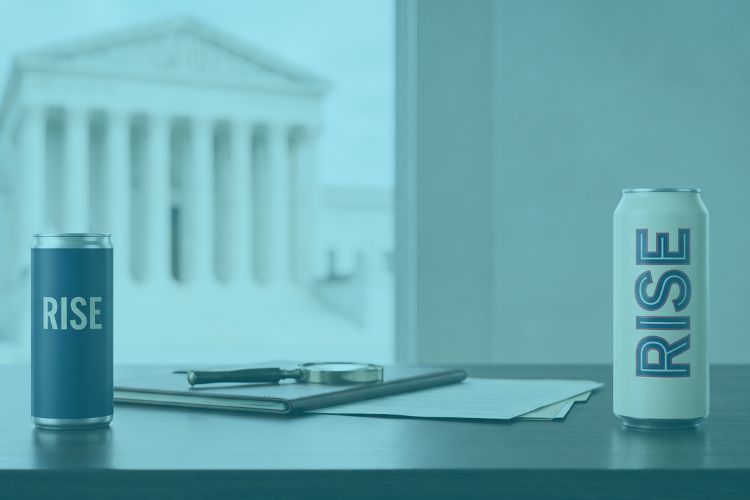
Why Trademark Strength Changes the Confusion Analysis
Rise Brewing’s federal infringement claim turns on likelihood of confusion. The Second Circuit studies that issue through eight Polaroid factors: mark strength, mark similarity, product proximity, actual confusion, good faith, product quality, buyer care, and the chance that the senior user will bridge a market gap.
Strength affects the room a brand can claim around its name. A highly distinctive trademark can reach farther across similar uses. A weaker term usually protects a tighter zone. When I apply the factors courts use to assess likely consumer confusion, strength helps set the boundaries before the remaining evidence fills in the picture.
Trademark strength has two parts. Inherent strength asks what the wording communicates in relation to the goods. Acquired strength asks what buyers have learned through use, advertising, sales, and market recognition.
The lower courts treated RISE as suggestive for coffee products, yet inherently weak because the word evokes waking, mornings, and energy. Rise Brewing answered with two federal registrations, years of use, national distribution, and about $17.5 million in advertising from 2015 through 2021. The district court found that record insufficient to create a triable issue when weighed with its weakness and dissimilarity findings.
At the Supreme Court, the case focuses on the procedural consequence. Judges can resolve legal questions and appellate courts review them fresh. Genuine factual disputes can require a jury, and later review gives factual findings more deference. Classifying strength therefore affects who weighs competing proof and whether a case can end at summary judgment.
The question presented by the Supreme Court asks whether trademark strength is a question of fact under 15 U.S.C. § 1114. Rise Brewing says twelve circuits treat the issue as factual. The United States also said inherent strength contains a factual component.
The Court could answer the classification question and return the confusion analysis to further proceedings. It can define the decision maker without declaring RISE strong, finding confusion, or holding PepsiCo liable. That procedural boundary explains how a one-word beverage dispute reached the justices after summary judgment.
What Reverse Confusion Looks Like in a Crowded Beverage Aisle
The commercial tension appears in a refrigerated aisle. Rise Brewing’s product used a slim seven-ounce can led by the word RISE. PepsiCo’s sixteen-ounce package placed a jagged RISE treatment below the MTN DEW house mark, alongside a lion design and bright flavor colors. Both products competed for a morning caffeine occasion through some overlapping retail channels. Shelf placement put the common word beside different source cues.
Rise Brewing alleged that PepsiCo’s reach could change what shoppers associated with the shared word. Its Supreme Court petition describes MTN DEW RISE ENERGY distribution through more than 170,000 retailers. The complaint also alleged overlapping shelf placement, similar morning messaging, search visibility, and questions from suppliers, retailers, consumers, and PepsiCo’s customer-service operation.
Those allegations support reverse confusion. The theory applies when a larger junior user’s presence causes buyers to view an earlier, smaller brand as affiliated with the larger company or derived from it. The senior user may retain the name while losing control over the source buyers attach to it. A separate dispute shows how a larger junior brand can overwhelm an earlier identity in another market.
I find the shelf context especially useful because it puts scale and presentation in the same frame. A shared word can invite affiliation questions. House branding, color, graphics, size, and the surrounding category can push buyers toward separate sources. Courts examine the shared word in its complete marketplace presentation, including the house brand, colors, graphics, size, and category.
The lower courts centered their rulings on the crowded field and the packaging. The Second Circuit connected the ordinary word rise with mornings and energy. Both the appellate and district courts found the full packages dissimilar despite the shared term. They also found Rise Brewing’s confusion evidence unable to overcome the weakness and packaging findings at summary judgment.
Supreme Court review begins upstream from that balance. A new rule about who evaluates strength could change how the record is handled. The competing views of the beverage aisle would remain part of the confusion analysis.
How Brand Owners Can Build a Better Record Before Conflict
A trademark lawsuit usually depends on records created before either side expected litigation. I start with the name itself. Wording that identifies a source without describing a product feature, use occasion, or promised effect gives the owner more separation from neighboring brands. The word mark, logo, packaging, and product-name system also deserve separate protection decisions.
Clearance belongs before a public announcement, package order, or launch campaign. Useful research that goes beyond an exact-name search checks federal records, state records, common-law uses, related goods, similar sound and meaning, and realistic expansion plans. Finding a conflict early preserves the option to change course before customers learn the name.
A search result needs context. I compare the wording, goods, channels, buyers, and expansion plans before treating a similar name as a conflict. That analysis helps a business distinguish a real obstacle from a remote use and document the choice it made.
The application should match the business that will use it. Identify the goods and services accurately. Consider how a standard-character filing and a design filing protect different elements. Preserve dated first-use records and final specimens that show the mark in commerce. Loose descriptions and scattered files make later proof harder.
After launch, ordinary business records can document acquired strength. Keep dated packaging, channel-level sales, advertising spend, campaign reach, press coverage, retailer records, and examples showing how buyers identify the source. Survey evidence may fit a dispute with enough at stake to justify it. These materials show how recognition developed across time and markets.
Confusion reports need the same discipline. Record the date, speaker, wording, product context, and follow-up while the event is fresh. A folder of unexplained screenshots forces a later reviewer to reconstruct the story. A dated report preserves who confused which source and why.
Monitoring completes the sequence. Watch new applications and marketplace uses so a conflict surfaces while the business still has options. Get legal analysis before sending a demand or changing a launch. Early choices can affect the claims, defenses, evidence, and commercial room available months or years later.
Treat Trademark Strength as a Business Asset
The Supreme Court may change how courts in the Second Circuit assign and review trademark-strength questions. Business owners can act now by choosing a defensible name and building records that show what buyers associate with it. Delay lets similar uses spread while memories and records grow harder to reconstruct.
I help business owners evaluate proposed names, conduct clearance work, prepare federal trademark applications, and assess protection or enforcement options when a conflict appears. That review can cover a company name, product line, event, service brand, logo, or packaging system.
If your brand depends on a word you have never fully tested, contact my office to discuss the mark and the business behind it. Evaluate it before more money, packaging, and reputation become tied to a name that may prove hard to defend.