One of rock’s most legendary bands cannot convince the federal government that adding “Experience” to their name creates something new.
On December 9, 2025, the USPTO issued its second office action rejecting Led Zeppelin’s trademark application for “THE LED ZEPPELIN EXPERIENCE.” Superhype Tapes Limited, the Jimmy Page-owned company behind the filing, now faces a dual refusal that strikes at both the mark’s similarity to the band’s existing trademark and the descriptiveness of the word “Experience” for entertainment services.
The rejection creates a March 2026 deadline for response. More critically, it may force the band to reveal details about a mysterious entertainment project they have guarded for nearly eight years. The USPTO examiner found the proposed mark “confusingly similar to the registered mark ‘Led Zeppelin'” because “the marks look and sound similar and create the same commercial impression.” The examiner also determined that “Experience” merely describes a feature of entertainment services, defining it as “events lived through or participated in.”
The timing adds pressure. Superhype Tapes filed this application on July 14, 2025, just two weeks before a July 29 deadline that would have permanently extinguished the band’s prior trademark rights in the phrase. Seven years of trademark pursuit and an undisclosed entertainment venture now depend on convincing a USPTO examiner that “Led Zeppelin Experience” functions differently than “Led Zeppelin.”
The band that won the “Stairway to Heaven” copyright battle now struggles with one common word.
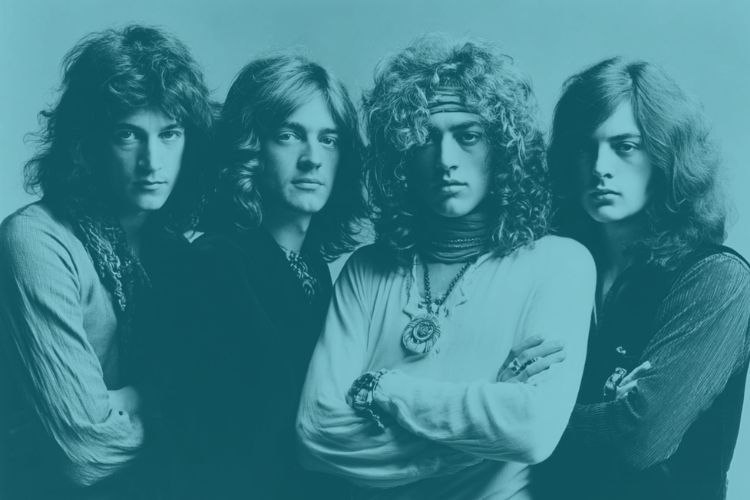
When Famous Names Meet Generic Words
The USPTO’s dual refusal puts Led Zeppelin in a trademark trap that catches many famous brands. Adding descriptive terms to an existing mark rarely creates sufficient distinction. Instead, it creates two problems simultaneously.
The Section 2(d) likelihood of confusion analysis examines whether consumers would assume the marks share a common source. When the base mark is identical, the examiner evaluates whether the addition creates a meaningfully different commercial impression. Here, the USPTO concluded it does not. “LED ZEPPELIN” and “THE LED ZEPPELIN EXPERIENCE” look similar, sound similar, and communicate the same source to consumers. The existing “LED ZEPPELIN” registration blocks the expanded version.
The Section 2(e)(1) descriptiveness refusal compounds the difficulty. Entertainment services are, by definition, experiences. Concerts are experiences. Stage shows are experiences. Immersive exhibitions are experiences. When a word directly describes what the service provides, trademark law treats it as available for all competitors to use. Granting exclusive rights to “Experience” for entertainment would unfairly restrict the marketplace.
Overcoming dual refusals requires addressing both grounds. The applicant must respond within six months or face abandonment. Options include arguing the marks create different commercial impressions, claiming acquired distinctiveness through extensive consumer recognition, disclaiming “Experience” while keeping the composite mark, or seeking registration on the Supplemental Register with reduced benefits. The Supplemental Register provides some legal advantages but no presumption of validity. It functions as a placeholder while the applicant builds evidence of distinctiveness.
None of these paths looks promising. The band’s fame works against them on the 2(d) analysis because consumers strongly associate “Led Zeppelin” with a single source. Any extension feels connected. That connection is precisely what the USPTO treats as confusion risk. Even disclaiming “Experience” would not eliminate the 2(d) refusal based on the identical “Led Zeppelin” portion.
When responding to office actions involving dual refusals, applicants face compounding evidence requirements. Statistics show 80% to 90% of merely descriptive refusals are affirmed on appeal. Adding a 2(d) refusal based on your own prior registration creates an unusual self-blocking scenario where brand strength becomes a liability.
The Experience Economy Meets Legacy Rock
Led Zeppelin’s trademark pursuit reflects a broader industry shift. Legacy artists increasingly seek intellectual property protection for immersive entertainment beyond traditional touring.
ABBA Voyage opened in London in 2022 with digital avatars performing for live audiences. The production carries a reported $2 billion valuation and has sold over 2.6 million tickets. Pink Floyd mounted “The Pink Floyd Exhibition: Their Mortal Remains,” which attracted 400,000 visitors during its London run alone. Elvis Presley Enterprises operates “Elvis: Direct From Graceland” exhibitions worldwide. The Rolling Stones’ “Unzipped” exhibition toured multiple continents featuring 400 artifacts. As aging rock legends reduce or end live touring, experiential entertainment offers continued revenue streams worth hundreds of millions annually.
The trademark application hints at Led Zeppelin’s ambitions. Beyond live performances and stage events, the filing covers webcasts, podcasts, non-downloadable online videos, and publishing of books and magazines. Speculation suggests an immersive exhibition, hologram performances, or an archive of previously unreleased live recordings. The band has not disclosed specifics. That secrecy may now hurt their trademark prosecution.
Jason Bonham’s Led Zeppelin Evening provides relevant history. The son of late drummer John Bonham operated a tribute band called “Jason Bonham’s Led Zeppelin Experience” from 2010 until December 2017. Weeks after Superhype Tapes filed for “THE LED ZEPPELIN EXPERIENCE” trademark in November 2017, Bonham changed his band’s name. He later explained: “They have plans for the terminology ‘Led Zeppelin Experience.'” The band secured cooperation from a family member’s tribute act. Convincing the USPTO proves harder.
Without US trademark protection, enforcement becomes difficult. Led Zeppelin holds “The Led Zeppelin Experience” registrations in the United Kingdom and European Union, both expiring in November 2027. The US market remains unprotected. Anyone could theoretically operate a “Led Zeppelin Experience” exhibition, concert series, or streaming archive without trademark liability. That gap undermines trademark protection strategies for whatever project the band has planned.
Building Distinctiveness Before You File
Led Zeppelin’s predicament offers lessons for businesses selecting trademarks for entertainment ventures.
Clearance searches typically focus on likelihood of confusion with third-party marks. The band had no third-party conflicts. Their problem came from descriptiveness analysis, which receives less attention in standard clearance. Before committing to a mark, ask whether the proposed name describes what your service does. “Experience” combined with “entertainment services” raises an obvious descriptiveness flag. A comprehensive trademark search process should evaluate both confusion risks and descriptiveness concerns.
Famous brands face a paradox. Clearance advantages exist because no competitor can adopt the base mark. But adding generic terms to famous marks creates self-blocking. The strong consumer association that makes “Led Zeppelin” valuable also makes any extension feel connected to the original. Strategic alternatives include distinctive coined additions, arbitrary terms, or suggestive phrases that require imagination to connect to the services. Consider the difference: “Led Zeppelin Experience” describes what consumers will have, while a coined term like “Led Zeppelin Mothership” (the title of their compilation album) would require thought to connect the name to the service.
Acquired distinctiveness offers another path, but requires evidence. Consumer surveys, advertising expenditure records, media coverage, and duration of exclusive use can demonstrate that consumers recognize a descriptive term as indicating a specific source. The problem for Led Zeppelin: their project has not launched. No evidence of consumer recognition exists because the “Experience” has not been experienced by anyone.
Response strategy now requires difficult choices. Led Zeppelin could submit arguments distinguishing the commercial impressions, provide evidence of the marks coexisting in the marketplace, or reveal project details showing different context from standard Led Zeppelin goods. Each approach carries risks. Detailed disclosure may compromise competitive advantage. The March 2026 deadline leaves three months for decision-making. If the response fails, TTAB appeals typically add two or more years and substantial legal costs. Meanwhile, the mysterious project may proceed without trademark protection.
The Clock Runs on Rock Royalty
Led Zeppelin’s seven-year trademark journey shows that brand recognition alone cannot overcome basic trademark law hurdles. The band filed in 2017, forced a name change from Jason Bonham, holds registrations in Europe, yet cannot secure US protection for “The Led Zeppelin Experience.” For business owners planning branded experiences, exhibitions, or entertainment projects, the lesson crystallizes: descriptive terms in your trademark create vulnerabilities that fame cannot fix.
I analyze trademark applications for descriptiveness risks before filing, identifying terms that might trigger 2(e)(1) refusals and recommending alternatives that preserve brand messaging while improving registrability. When office actions arrive with dual refusals like Led Zeppelin faces, I develop response strategies that address each ground systematically. My clients launching entertainment ventures receive clearance opinions evaluating both confusion and descriptiveness angles.
If you are developing an entertainment project, immersive experience, or branded event, your trademark strategy needs attention before you announce anything publicly. I can review your proposed marks for descriptiveness concerns and help you select protectable names. Contact me for a consultation to discuss your trademark clearance and registration strategy.