A billionaire candidate spent $13 million of his own money on a California gubernatorial campaign, then sued a rival for using the same three words. The court’s response exposed the limits of trademark law in politics.
The $13 Million Slogan Dispute
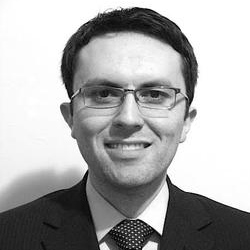
Stephen Cloobeck, founder of Diamond Resorts International, announced his 2026 California gubernatorial campaign in November 2024. He sold Diamond Resorts to Apollo Global Management for $2.2 billion in 2016 and has appeared multiple times on Undercover Boss. For the governor’s race, he self-funded $13 million of his $13.6 million war chest, making him the best-financed candidate in the field. His central branding: “I AM A PROVEN PROBLEM SOLVER.”
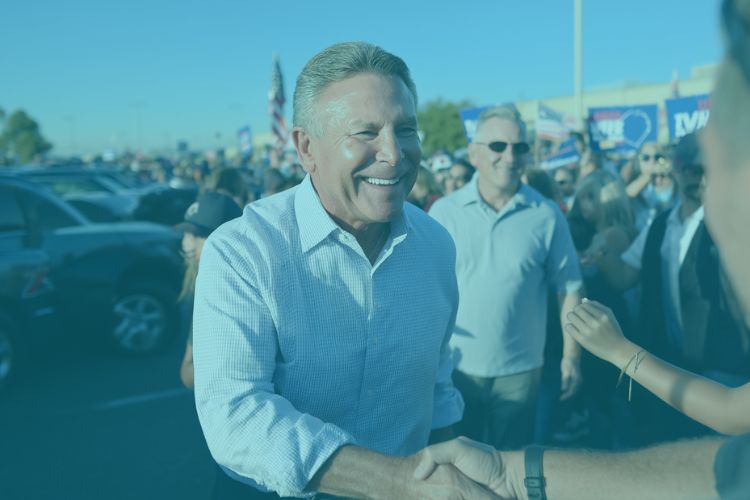
Cloobeck began using the slogan in March 2024, months before his formal campaign announcement, and filed a USPTO trademark application on December 12, 2024. When Antonio Villaraigosa, the former Los Angeles mayor and California Assembly speaker, started using “PROVEN PROBLEM SOLVER” in his own campaign materials, Cloobeck sent a cease-and-desist letter. Villaraigosa refused to stop.
On April 29, 2025, Cloobeck filed a Lanham Act lawsuit in the Central District of California, seeking to block his rival from using the phrase. He claimed federal trademark infringement and unfair competition. The case landed before Judge André Birotte Jr.
On December 8, 2025, Judge Birotte dismissed the case with prejudice and denied leave to amend. By then, Cloobeck had already dropped out of the race and endorsed Rep. Eric Swalwell. The ruling arrived as a final punctuation mark on a campaign strategy that tried to own language no one can own.
Why The Court Said No
Judge Birotte called “proven problem solver” a “descriptive, generic” phrase that captures a universally desirable political trait. Politicians have used similar language since at least 1989. The phrase describes a quality. It does not identify a source.
The Lanham Act regulates the commercial marketplace of goods and services. It protects consumers from confusion about who makes a product or provides a service. It does not referee campaign rhetoric in what the court called “the marketplace of ideas and opinions.”
Even if trademark law applied to political speech, Judge Birotte found no likelihood of confusion. Voters understand that Cloobeck and Villaraigosa are two distinct candidates in a high-profile race. They have separate campaign websites, separate social media accounts, and separate public personas. No reasonable voter would believe they are affiliated because both use a common political descriptor.
Cloobeck argued that other political slogans have received trademark protection. He cited “MAKE AMERICA GREAT AGAIN,” “YES WE CAN,” and “BUILD BACK BETTER.” The court drew a sharp distinction. Those slogans were “historically distinctive and uniquely associated with a specific candidate or movement.” They function as source identifiers. “Proven problem solver” does not.
The federal trademark registration process requires that a mark distinguish one party’s goods or services from another’s. Filing an application does not create rights in generic language. Harvard Law Professor Rebecca Tushnet, commenting on the case, called “proven problem solver” a “classic example of a descriptive use that should be allowed.”
The First Amendment concern sealed the outcome. Granting exclusive rights to this phrase would “remove a phrase from ordinary political discourse and risk chilling core campaign speech.”
The Distinctiveness Problem in Political Branding
Trademark protection exists on a spectrum. Generic terms receive no protection. Descriptive terms get limited protection only if they acquire secondary meaning. Suggestive, arbitrary, and fanciful marks receive the strongest protection.
“Proven problem solver” sits at the weak end. The phrase literally describes what every politician claims to be. Any candidate could plausibly use it. Contrast this with “Make America Great Again,” which does not literally describe a political platform. It became uniquely associated with Donald Trump through consistent use starting in 2015. The phrase now functions as a source identifier, not a description.
The USPTO often rejects political slogans under the “failure to function” doctrine. The office finds that many political phrases are merely informational or ornamental. Voters see them as statements of position, not indicators of source. A trademark clearance search would have revealed that “proven problem solver” was already widely used by politicians across the country.
The Supreme Court’s 2024 decision in Vidal v. Elster added another layer. That case involved an application for “TRUMP TOO SMALL,” a phrase Steve Elster conceived after watching a 2016 Republican primary debate where Marco Rubio joked about Trump having small hands. The Court upheld the USPTO’s rejection under the “names clause,” which requires consent from living individuals whose names appear in trademark applications. Political commentary trademarks face constitutional scrutiny from multiple angles.
Eric George, Villaraigosa’s attorney, summarized the practical reality: the ruling “confirms that a candidate for political office can’t limit an opponent’s speech in an attempt to gain tactical advantage.”
The distinction matters for commercial brands too. Trying to trademark language that describes what you do, rather than who you are, faces the same uphill battle.
How To Create Protectable Slogans
Cloobeck’s approach failed because he tried to own common descriptive language. The phrase he chose could apply to any politician. That made it unownable.
What works is different. Coined terms, unexpected word combinations, and phrases that become uniquely associated with one source through consistent use all receive stronger protection. “Make America Great Again” succeeded because Trump used it relentlessly from 2015 onward. By the time he filed for trademark registration, the phrase had become synonymous with his campaign. It had acquired distinctiveness through years of exclusive association.
Before investing in any slogan, apply what I call the competitor test: would a competitor need to use these exact words to describe their offering? If yes, you probably cannot own it. A financial advisor calling herself a “proven problem solver” is describing a quality that any financial advisor would claim. She is not creating a brand. A financial advisor calling herself the “Money Whisperer” is creating something ownable because no competitor needs that specific phrase to describe their services.
Filing timeline matters too. Cloobeck filed his application in December 2024, but Villaraigosa could point to decades of prior use by other politicians. Even if the phrase had been distinctive, priority would have been nearly impossible to establish. The record showed politicians using similar language going back to 1989.
Consider also how your phrase will function in real-world use. Will voters or customers see it as identifying you specifically, or as a generic claim anyone might make? If a hundred politicians can credibly call themselves “proven problem solvers,” the phrase has no trademark significance. If only one politician uses “Make America Great Again,” the phrase becomes a source identifier.
These principles extend beyond politics. Commercial brands face identical challenges. The cost to file a trademark ranges from $250 to $750 per class in USPTO fees alone, plus attorney costs. That investment becomes worthless if the phrase you chose was never protectable in the first place. Cloobeck’s $13 million campaign budget could not turn generic language into exclusive property. Neither can yours.
Protect Your Brand Before You Build On It
Building a campaign or brand around unprotectable language creates risk. You invest in marketing, build recognition, and establish goodwill around a phrase that any competitor can use. When you try to enforce rights that do not exist, you lose in court and pay your opponent’s legal fees. Clearance research before major investment prevents these surprises.
When I evaluate proposed marks, I assess where they fall on the distinctiveness spectrum. I identify phrases that will face examiner rejections or litigation challenges. I help clients develop marks that actually function as source identifiers, not descriptions that anyone could claim.
If you are developing a brand identity or campaign slogan, I can evaluate your proposed marks before you invest in them. Contact me for a consultation to discuss whether your language is protectable and how to strengthen it if it is not.